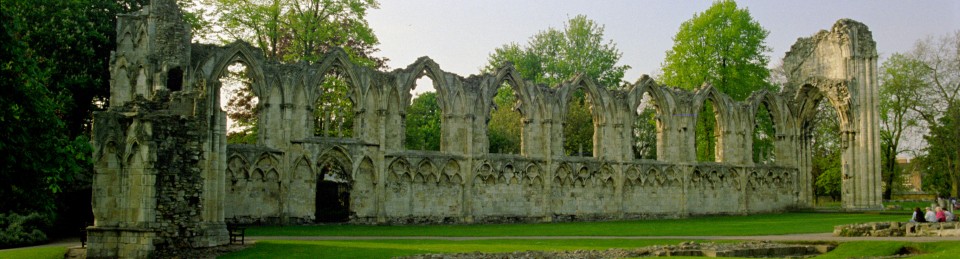
It all comes from the Vine

Sermon transcript, 3 May 2015

It all comes from the Vine by Fr. Dana

Acts 8:26-40, Psalm 66:1-12, I John 3:14-24, John 15:1-8

Recording:  http://1drv.ms/1gUUg6J

We desire the power of God; we desire the power of the resurrection. We celebrated Easter Sunday not long ago: the most powerful time and the most powerful event in the universe.  But Jesus didn’t get to the resurrection directly.  He couldn’t get to the resurrection until He had gone through death.  And He didn’t get to death until He had gone through obedience.  He was obedient until death, and that obedience started when the Father asked Him, “Would you go down there to the earth, to My creation, and give Your life for them?” It didn’t start in the garden of Gethsemane: it started back in heaven.

How can we receive that power? Today’s Gospel begins with Jesus saying, “I am the true vine, and My Father is the vinedresser (John 15:1). Later He says, “Abide in Me, and I in you.” (John 15:4a)

Where is the joy?

Dcn. Andrew and I just returned from a clergy meeting and church growth seminar in Cologne, Germany. And yesterday, after it was all over and most of the people had left, we had a chance to reflect on what we had heard and experienced. We had joined probably more than a hundred people from the CEC throughout Europe.  Dcn. Andrew said that one of the differences between the people in St. Stephen’s and the people we had seen there was joy.  There we had seen a joy in serving God and others that has not been seen in London for quite some time.  Do not take that as a criticism: that is not how he meant it or how he received it; and I agree with him.  It’s not that you are deficient: you volunteer to help and do all kinds of things, and you’re happy when you’re helping; but true joy seems to evade you like a butterfly that’s just out of reach.  We could be wrong, but I would ask you to think and pray about it: is it true?

I believe it because I know what that’s like: I can remember sitting in a small group in Oklahoma back in 1984 (the early Palaeolithic period for some of you!), and I remember finally blurting out what had been bubbling in my heart for a long time; I didn’t have a word for it, but for a dozen years something had been going on, and finally I just let it all out. Where is the joy?  I was saved at the age of nine, about 21 years before that.  Being saved wasn’t a problem, but where was the joy?  I was doing what was right because I knew it was right, but the joy in doing it wasn’t there.  Ask yourself: are you feeling that?  It’s not that you’re doing the wrong thing – you’re doing the right thing; you’re doing it because it’s the right thing, you’re doing it because you love Jesus…  But do you ever wonder, shouldn’t there be some joy in this? – The joy that comes out of your heart, not because people appreciate me, not because everything is good, but just joy in serving the Lord.

“Am I loved?”

My next thought is: If there is this difference, why? What has produced the difference between the people that we met or met again in Cologne, and the people here that we know and love?  You and they have a lot in common: they’re not that much different from you.  They have families where both parents or Filipino, or where one is Filipino and the other is European – and in most of those the female is Filipina… but I wonder if there isn’t one struggle that you have that they don’t.  Some of them have been around as long as you – I don’t know the exact dates of how you spread through Europe – but I think it might be safe to say that none of those churches have gone through a significant period without a full-time resident Rector, certainly after having one the first time; they’ve never had that experience of being left – Not alone: you weren’t left alone, and Fr. Donn (bless him and his family) poured himself out to be here for you, to stand in the gap for you; you weren’t left alone, but you were still left, and that does something.  – Just like a divorce: even if both sides agree that this is the best thing, and there aren’t any children, it still hurts; and it does something inside.  I just wonder if that’s not the case.

And I think there’s a reason for that, both in terms of marriage and your relationship with your Rector. Have you ever heard the saying that each of us has a God-shape vacuum in our heart?  There’s a space in our heart that wants to be filled, and it’s peculiarly shaped so that only God can fill it.  It’s not the only analogy that works, but I believe that it’s true.  Everyone has a fundamental need and a driving desire for the answer to one question – and our Patriarch talked about this in the last few days.  That question is: “Am I loved?”  And the question that’s in the hole in your heart is not just, “Am I loved by someone?” but “Am I loved by God?”  Everyone has it; not everyone will acknowledge that that’s what that is, but they will still try to fill that hole with everything else in the universe: sex, money, drugs, rock and roll… you name it; and none of that works.  Everyone has this fundamental need and this consuming desire to know the answer to the question, “Am I loved?”  And if the answer is “I’m just an accident of circumstance” or “I evolved from something”, then the answer is automatically “No, because there is no one to love me like that” – which is why that particular religion is so dangerous.

Am I loved? How do you know you are loved?  If I asked you that question, “How do you know you are loved by God?” how would you answer me?  He created you…  It tells us in the Bible…  Both of those are true.  The Bible says we are loved, and we know the Bible is true; therefore I must be loved.  That’s all we need to know, right?  In my head I know I am loved.  How far will knowledge get you?  When the storm comes up and life starts overwhelming you, “The Bible says God loves me”.  Yes, it does.  It’s one thing to know the facts; it’s a totally different thing to experience the truth.  If you only know the facts, then you have to keep reminding yourself: “God loves me; God loves me… Why the hell am I here?  God loves me…”  Once we’ve experienced the truth, we don’t have to convince ourselves, we don’t have to argue: we know…  One of my past Bishops used to say, “You know it in your knower” – the part of you that knows not just facts, but the part of you that knows so that it doesn’t matter what happens, what I know is truer than what I see.  You know the facts: you know God loves you; but you still long for your experience to flesh out the bones of the facts.  The bones by themselves are dry. “Can these bones live?” (Ezekiel 37:3) How can they live?  God has to breathe into them (Ezekiel 37:4-10).

I ask you: you’re living and moving and having your being in Jesus Christ; but is there this feeling that just won’t go away? Is there this wondering: What would it be like if every action that I did came from the heart of God instead of from me working so hard just to get one foot in front of the other? – It’s work; why can’t it be joy?

It hurts…

God loves you; but then, if God loves in you, why did your Rector leave? If God loves you, why did your first husband or wife leave? Why?Especially in those relationships that are so important in our lives because they are in the image of God’s relationship.  The Covenant of Marriage is a Sacrament; the Ordination of a Priest is a Sacrament: they both have vows that are made to God, to do certain things, to act certain ways, to love.  And if you’ve been hurt because of a human – because both are human: both your spouse and your Priest – and your Deacon and your Bishop and your Patriarch – are all human; and the fact that they have been through a Sacrament and have made vows does not guarantee that we’ll always be faithful.  You’ve been through the vows, and it didn’t guarantee that you would be faithful either.  Hopefully, love overcomes unfaithfulness; but it still happened, and it still hurts.

And there was a time when you as a church needed someone – and Fr. Donn did his superhuman best to be that someone from hundreds of miles away on a part-time basis because there were other people he was committed to – but you needed someone here on the ground to be the hands and feet of Jesus in the trenches, in the battle, behind enemy lines.   – Because that’s really where we are.  The earth is the Lord’s, but for a time He has allowed it to be occupied by the enemy.  We are citizens of heaven – we are not citizens of this earth – and so we are here behind enemy lines, fighting the battle.  And when the captain suddenly disappears, it hurts.

That doesn’t mean that we don’t forgive him and we don’t love him. Just acknowledging that it hurt does not put blame on someone else.  We’re not trying to make excuses or point blame; we’re trying to get down to what was left inside after the sword was removed.  Have you watched The Lord of the Rings, the movies?  Remember when Frodo gets stabbed and a little piece of the sword breaks off in there.  And it doesn’t matter what you do on the surface: if you don’t get the point of the sword out, he will die.  And my question is: Is there a little tiny shard of the past – whether it’s St. Stephen’s, or maybe it’s something else: maybe it’s a marriage, maybe it’s a combination of things – is there something in there, so small that it doesn’t really show on the surface, but it’s sapping … stealing everything the Lord puts in? – Yes, it’s there, but it’s work…

Where the power comes from

Was that time in the history of St. Stephen’s when your joy started leaving, or was it another time not related to St. Stephen’s? Was there ever a time when it was a joy to serve? – I mean really a joy.  It was still hard – you still had to come every Saturday to set up, you still had to do 9,000 tonnes of laundry and ironing, and pull things out of storage and put things back in storage: it was hard, but it was joyful. – Not just happy – we can be happy now – but “I don’t mind this a bit”.  Because with the joy comes the energy, the power to do this.  If I’m not getting power when I’m doing this, I’m draining my battery, and every night I have to go home and plug myself into the wall to get re-charged.  And sometimes the night isn’t long enough to get me recharged, or I forget to plug myself in until 2:00 in the morning.

“I am the vine, you are the branches.” (John 15:5a) You can be connected to the vine and damage can come that doesn’t cut you off, but it removes a big part of your ability to receive from the vine, so that what comes from the vine is dripping on the ground or drying out or just not getting through. And if it’s not getting through, you’re starving; you’re not green and lush and healthy and robust and growing all the time: you’re just trying to keep from turning brown and falling off. “Abide in Me, and I in you. As the branch cannot bear fruit of itself, unless it abides in the vine, neither can you, unless you abide in Me… for without Me you can do nothing.” (John 15:4, 5b)

Help them know they are loved

I’m only beginning to learn that the most important thing a Rector can do for the flock is to help them know they are loved – not by telling you (although hopefully I do tell you), but more importantly by what I do; and I confess I haven’t been really good at that. I’ve already failed in many ways, and I’ve only been here not quite a year. I didn’t fully understand. Before teaching, before exhorting, before encouraging, before planning, before anything: loving. Not in a way that I think says “I love you”, but in a way that you think says “he loves me”. Not because I’m God, but He put me here as His overseer, and so what I see Him doing is what I need to do. Today starts a new day. And I’m only at the beginning of that, and so I ask you to pray for me.

That’s the good news. The bad news is, you have the same responsibility. Think about it: When a visitor walks through that door, they have the same question: “Am I loved? Does God love me?” They may not phrase it that way, but they want to know, “Am I loved?” and the real question is, “Am I loved by the One that matters? Because He created everything.” When they walk in, how will they know the answer? How will they know, “Does God love me? Am I loved?” Am I the only one who can show them? I hope not; because if so, we’re in deep trouble. How will they know? What if they’re not Filipino? That could be tough. It is tough, because we’re like a family; but it can be done. How can you show them they are loved? I don’t have a simple answer to that, and I’m not looking for one; but I do have a more important question: If we don’t show them that they are loved, why should they come back?

This is a challenge; this a huge challenge – not just for you but for me as well. And the answer is in the Gospel: we can only show them that they are loved if we are connected to the Vine and there isn’t anything that’s hindering the flow of nutrients from the Vine to the branches. Jesus is the Vine; we are the branches. It isn’t good enough for Him to sit over there and for us to sit over here and we look at Him, if we’re not receiving anything.

Conclusion

Yesterday’s New Testament reading from Colossians 3:12-14 said, Therefore, as the elect of God, holy and beloved, put on tender mercies, kindness, humility, meekness, longsuffering;  13 bearing with one another, and forgiving one another, if anyone has a complaint against another; even as Christ forgave you, so you also must do. 14 But above all these things put on love, which is the bond of perfection.”  The fact that most of you are here means that you have put on longsuffering: have many of the adults been here less than five or ten years? You are the ones who have hung in there; you are the ones who are longsuffering. Some people couldn’t: they had to leave. And we’re not going to condemn them: we’re all at different stages and different maturities in our walk. But if you didn’t forgive one another, you wouldn’t be here, because I’m sure we all have things that we could harbour unforgiveness about, and if we thought about them we’d leave.

We can’t change the past; but we can make sure there’s no little sliver of the sword inside that still steals our joy, steals what we receive from the Vine; and that’s what will make the difference – not just for us but for people who will come in that door. Maybe I blew it when they came in the door: maybe I should have stopped my sermon and said something. “Like to think that your sermon was so important that you couldn’t just stop and say…?” We learn from our mistakes: if we don’t, we keep making them; but we can learn. We can’t change the past: we can heal it, we can let God heal it, we can acknowledge it – which is the first step to healing; but we can’t change it. What we can change is the future. And by healing the past we free up the future. I am not willing to let the past hold my future hostage, to let my future or St. Stephen’s future be chained to something in the past: because it will keep us from being who we’re called to be and from doing what we’re called to do.

But the only way we can change is if we abide in the Vine. “Abide” is not “in the presence of” – it means “connected to, receiving from, all the time”. We’ll see how God wants to work that out: it’s not announcing a big new programme: I don’t have a big new programme. I just know that that’s what God wants to do, and that we will change the world if we love the way Christ loved us.

How God makes Himself known

Sermon transcript, 26 April 2015

How God makes Himself known by Fr. Dana

Recording:  http://1drv.ms/1NYuv4b

God is speaking about the church rising up.  In our days it seems that the words from Psalm 2:1-2 quoted in the first reading are certainly true (Acts 4:25-26).  Even nations that were historically Christian are becoming increasingly anti-Christian – not just post-Christian (“we used to be”) but anti- ; perhaps God is bringing things to a head.  And the question is: How do we respond to that?  Because we are called to rise up: the Church is called an army [Ezekiel 37:10]; Jesus is called the Captain of the Host [Joshua 5:14, Revelation 19:11ff].

How are we called to fight?

So we are to fight; the question is: How do we fight? [II Corinthians 10:3]  Do we make signs and march down the street and beat people over the head who don’t want to listen to what we have to say? Do we go on national television and get into a shouting match with them?  They can speak pretty loudly, and they have a lot of financial backing from various places in the world.  How do we fight?

What did we see when Peter and John were let go?  They went to their own companions and reported all that the chief priests and elders had said to them” (Acts 4:23) – They had threatened them if they didn’t stop preaching and ministering in the name of Christ.  First their companions quoted the Psalm that I read to you, because it looked to them as if the world was matching what the Psalm said.  Certainly Pontius Pilate, the Gentiles – everybody – gathered together to bring about Jesus’ death (Acts 4:27-28).  But they didn’t protest; they said, “Thanks be to God!”  And when they had prayed, the place where they were assembled together was shaken; and they were all filled with the Holy Spirit, and they spoke the word of God with boldness.” (Acts 4:31)  This is not Pentecost – that was two chapters earlier.

How did Jesus fight?

What was Jesus like?  If we’re supposed to fight, and we’re supposed to be conformed to the image of Jesus, one might suspect that we’re supposed to fight the way Jesus fought.  What did Jesus do when He was confronted with sin?  What did He do with the woman caught in adultery?  I believe what He did conformed to what Isaiah said He would be like.  Jesus had just healed a man’s hand on the Sabbath, and it made the Pharisees upset: read Matthew 12:15-21 [quoting Isaiah 42:1-4]. Jesus was looking for bruised reeds; He was looking for flames that were about to go out.  He wasn’t confronting the people who thought they knew it all – although He did confront the people (the Pharisees and the Sadducees) who thought they knew it all and claimed to be speaking for God.  He didn’t like people lying in God’s name.  The people who were sinning, like the adulterous, He had mercy on.  He knew her flame was about to go out, and so He didn’t snuff it out.  He also didn’t condone it – He said, “I don’t condemn you.  Go and sin no more.” [John 8:2-11]  What do you think that woman did, having had that experience: do you think she went back to her old life?  I’ll bet not.  When the Lord of the universe stands in front of you and says, “I don’t condemn you; but go and sin no more”, you can bet she was changed.  She found the God who loved her, and so she loved in return.

That’s how we’re called to fight – not to match word for word, blow for blow, sign for sign, march for march…  I’m not saying there aren’t times when marching is appropriate, perhaps; but that’s not going to change hearts.  You’re not going to change hearts by changing minds – the heart has to come first.

And so the way we rise up… the first step is the way Jesus did it.  He prayed – not only once a day, but often, because He said He only did what He saw the Father doing [John 5:19]; and so He had to take time to find out what the Father was doing.  Remember, He left His godly prerogatives in heaven when He became a man, so He didn’t automatically know everything that was going on: He voluntarily limited Himself; and so He had to get in touch with the Father: “What are You doing today?  Whom will I come across?  Whom do I need to minister to?”  He did that because…  Remember when He went to His hometown: He stood up in the synagogue and read from Isaiah: “The Spirit of the Lord is upon Me… to proclaim freedom for the captives…” and they said “Oh yes! Wow! Awesome!” And then He said, “There were a lot of lepers in Israel, but the only one who was healed was Naaman the Syrian.” [Luke 4:16-30]  He must have prayed about that situation, because He could have been really popular there; but instead He challenged them.

He was looking for people whose reed was bruised, and He wasn’t about to break them; but He did want them to know that they were bruised and they needed something.  He didn’t say, “It’s OK: you’re all right.  God loves you anyway.”  He loved them by telling them the truth, in a quiet way – not by shouting in the streets: not by confronting, not by arguing.  That’s hard.  He knew that He had all the answers: I would have been tempted to say, “Look, stupid!  How can I be more clear?” He didn’t do that – that’s what we have to do.  And so when the Lord says “Rise up”, He’s not talking about “Let’s go and organise a political party; let’s take over the government!”  Let’s take over the government by changing the hearts of the people, because if the people’s hearts are changed they’ll vote the right way.  We’re in the business of making disciples.

How does God reveal Himself?

And God has made Himself known.  He’s made Himself known in a couple of ways, and those are revealed in the Catechism.  Last week we talked about what a catechism is: that it’s instruction in the Christians faith; that it was taught to all Christians; and that it’s important because it records the truth and communicates it faithfully.

We had this discussion with someone this week: “Can’t you just know God by reading the Bible?  You don’t need to go to church; just me and the Bible, you can figure it out.”  If we were open only to the Holy Spirit we could do that; but even Satan appears as an angel of light [II Corinthians 11:14], and so you can’t just trust your own opinion.  And you should know that just by looking at all the people in the world and what their opinions are on the same passage: you can justify almost anything you want to do by picking out a Scripture.  And so the Catechism from early on in the Church was, “Here are the important things, and here is how they’re worked out: this is what they mean, this is what they do.”

Today I’d like to talk a little about God’s self-revelation: God reveals Himself.

General and special revelation

“How does God reveal Himself to all who would receive Him?  God reveals Himself by general revelation through His wonderful creation and by special revelation through Holy Scripture.  The definitive revelation of God is Jesus Christ.”  (ICCEC Catechism, Question 3)  Let’s look at a few Scriptures to prove the point.

Let’s start at the beginning: read Genesis 1:1.  If I’m a person who has never read the Bible before, and I’m born and I grow up and I look at the world, I wouldn’t necessarily automatically say that there’s a God who created heaven and earth.  So this is a special revelation, that God made the earth: Scripture is telling us where it came from.  But what it’s describing – in very general terms – is God’s general revelation; because if you look at the world, it’s too amazing to think that it probably came by itself.

Read Genesis 2:4.  We’re laying out the history: this is what happened when the earth was created.  That’s definitely special revelation, because we wouldn’t know anything about that without Scripture.

Read John 1:1-3: this refers to the same beginning as Genesis.  To find out what “the Word” is, we need to look at the rest of Scripture; and who is the Word?  Jesus is the Word made flesh.  In the beginning was the Word Jesus – not the word “Jesus” but the Person who was and is the Word.  Jesus was with the Father; and there was no time when God the Father was, that Jesus wasn’t.  Jesus wasn’t born later: He was born as a man later, but He was not created; He was in the beginning with God.  This is definitely special revelation, because there is no way we could just look at Creation and learn that: look at the design of a tree, how water freezes, the weather patterns… we couldn’t figure that out.

Read Romans 1:19-20.  Here we have a little more description of how this works, and of the difference between general and special revelation.  Man, before he had science, looked at the stars, and the sunrise and sunset, and Creation, and the birth of a baby, and said, “Wow! Miraculous!  There must be something or someone behind this.”  They wouldn’t know who or what He was like, but, “Wow!  This is amazing.  I don’t understand, and I can’t re-create it with my hands.”

Science supports our faith

It’s interesting that today in our culture there is a prevalent view that science is a danger to faith: “The more we know about science, the easier it is to prove the Christians are wrong.”  However in the last hundred years the opposite has been the case.  We used to think that Sodom and Gomorrah, Babylon, and a lot of these things, were stories and myths; but then we started discovering that these places really existed.  They found artefacts from Solomon’s reign and David’s reign.  The more we know, the more the Bible is proved right.

I’m not worried about people who have theories about what we know now, and these theories are at odds with Christianity, because they are only a theory.  When I was a young child, we thought that the atom was a billiard ball – you couldn’t get any smaller than that;  by the time I got to college we knew that it is protons, neutrons and electrons; and now I couldn’t even tell you all the particles: quarks and anti-spin and…

The more we learn, the more we see that this couldn’t come about on its own.  The Theory of Intelligent Design basically says that some things can come about through evolution: a bird can get a thicker or longer beak based on environmental conditions; a rabbit’s fur pattern can change over time.  However there are certain things that can’t happen through evolution: there is a motor in your cells that has several parts; and for it to function all the parts are required.  You can’t evolve a motor by a process such as: first the driver appears and then later the carburettor appears, and then the fuel appears… if the motor is critical for life.  It can’t happen gradually if you can’t have life without the whole thing – the whole thing had to happen at once, pretty much instantaneously.  That’s only one example.  Look at genetics and DNA: they think they can trace the DNA of mankind back to the area of the Euphrates in the Middle East, where Genesis said the Garden was [Genesis 2:8,10,14].  The more we learn, the more we know that what the Bible says is true.  The more we learn about archaeology, the more we discover that these places really existed.

You’ll also have people claiming, as they have recently, things such as “We’ve found Jesus’ tomb with his wife Mary and their child.”  Don’t worry about it – that too will pass.  Every time they think they have a theory that says, “Aha!  You’re wrong. I know it.  I’ve proved it”, the theory turns out to be wrong; and it’s not because they’re incompetent – it’s because God is real.

Creation and “the unknown God”

Read Psalm 19:1-4.  Everyone can understand a sunset and the stars in the sky. This is all general revelation.  God has done this, and if you look at it objectively you’ll say, “I don’t think this can be random.”  But then He gives special revelation.   Read Acts 17:23.  Paul was speaking to the people of Athens, and he had gone through their pantheon.  Why did they have a monument to an unknown God?  They had all these gods: the god of fire, the god of this and that, and Diana which was a meteorite that fell down from heaven…  But they had to have one for the unknown God, because all these other gods – idols, statues, meteorites, whatever – didn’t explain the world.  “This can’t be all of it, because there are things in the world that none of these can explain.”  So Paul proclaimed to them: read Acts 17:24-26.  DNA proves that it’s true: that all the nations of the world come from one blood – in fact, one couple.  Read Acts 17:26-30.  “Until now, if you didn’t know the Scriptures, all you’ve had was general revelation.  Now I’m proclaiming to you not just the Old Testament Scriptures, but a Person who is the ultimate special revelation of God, and His name is Jesus Christ.”  They’d already accepted that “There must be some God we don’t know about”; and Paul is saying, “Here He is: He became a man” – not like a Greek or Roman god who put on a disguise and came down and propagated the species; but He came down and was Man and was God and showed all the attributes of God: God’s truth, God’s way, God’s life, God’s love: all of it are embodied in Him.

Who does God reveal Himself to be?

So we have general revelation, special revelation; and the question is: “Who does God reveal Himself to be?”  Now that we’ve accepted that there is revelation, that we can know God and we can know some things about Him, who does He reveal Himself to be?  God reveals Himself as having one single Nature, but in a Holy Community of three Persons; named the Father, the Son and the Holy Spirit. This truth is revealed to us…” (ICCEC Catechism, Question 4)  It’s not general revelation: you’re not going to go outside, look at a forest and say “There must be a Trinity” – although it turns out that if you look at all of Creation you’ll find some amazing things.  Matter exists in three states: solid, liquid and gas.  There are a number of other places where the number three is important.  But that doesn’t prove God; it’s just there.  What does prove to us?

Read Deuteronomy 6:4: that’s the beginning of what the Jews call the “Shema’ Y’Israel”, and what Jesus called the First Great Commandment: it’s followed by “Love the Lord your God with all your heart, soul, mind and strength.”  There is one God.

How about those three Persons?  When a man came to Him and said, “Good Teacher, what must I do to be saved?” Jesus’ first response is, “Why do call Me good? There is only one who is good, and that is God.” (Mark 10:17-18)  He didn’t say, “Don’t call me good, because there is only one who is good and that’s God” – He said, “Why do you call me good?”  They didn’t record any answer, but Jesus asked the question.  Then after Jesus rose from the dead and appeared to the women who had come to the tomb, “they came and held Him by the feet and worshiped Him.” (Matthew 28:9)  Jesus said there was only one God; He told Satan in the desert, “You shall worship the Lord your God, and Him only you shall serve.” (Matthew 4:10, quoting Deuteronomy 6:13)  If the women worship Him and He is not God, what will He say?  The same thing the angel said to John: “Get up!  I’m a created being like you.” (Revelation 19:10) He didn’t say that – He accepted their worship.  He didn’t say the three words, “I am God”, but He said a lot of things that say “I am God”.

At the Last Supper He says, “The Helper, the Holy Spirit, whom the Father will send in My name, He will teach you all things, and bring to your remembrance all things that I said to you.” (John 14:26)  There’s the Trinity in one Scripture: the Helper, the Holy Spirit – that’s God; the Father – that’s God; in My name – He’s God.  Later He says, “But when the Helper comes, whom I shall send to you from the Father, the Spirit of truth who proceeds from the Father, He will testify of Me.”  (John 15:26) ­– One God, three Persons.  He’s still saying God is one, as the Shema’ says; but there are Three Persons.  Paul says in Ephesians 4:4-6, “There is one body and one Spirit, just as you were called in one hope of your calling; one Lord, one faith, one baptism; one God and Father of all, who is above all, and through all, and in you all.” – God the Father, God the Son, God the Holy Spirit.

Again and again: there are three Persons: one God but three Persons, with three roles, three functions.  And they’re not jealous of each other.  In fact there’s a theological term called perichoresis.  It’s a dance: the three Persons of the Trinity are in an eternal dance with each other.  Each one has His part, each one fulfils His part, each one moves perfectly in time with the other two, no one trying to rise above the other: perfect community.  We are created for that: that’s the kind of relationship we are created for, because we are made like Him.

Keep to the foundation

The point is, these are truths that have been in existence since the beginning.  And if we only take the Bible and choose verses to support our particular sins, habits, likes, dislikes… and ignore the basics, the foundation, we can build a structure that doesn’t look anything like God the Father, Son and Holy Spirit.  And if we do, at best Scriptures tells us in the end what we build will be burned up in the fire but we’ll make it through by the skin of our teeth; at worst, if we build something that is totally against God, we might not be saved.  And so it’s important for us to keep focused on the truth, on the foundation.  Whatever our special revelation is, we must keep to what He established from the beginning.

Where is your heart?

Sermon transcript, 19 April 2015

Where is your heart? by Fr. Dana

Recording:  http://1drv.ms/1gUrhjv

The topic this morning follows on from our men’s fellowship yesterday: “Where is your heart?” It comes primarily from Matthew 6:19-21. This applies not only to men. Where we spend the best of our time, talent and treasure is where our heart is. That could be football, television, our work or career, our family, or the Lord. For each of us last night, God and our family were at the top; that is very good. God wants to build on this foundation.

God owns everything. If God owns everything, what do you own? – Nothing; and I don’t either, despite what the taxman says! Read Psalm 50:10-12. You mean all those blood sacrifices barbecued on the altar weren’t because God was hungry? No! That’s not why they were established. God does as He wills.

How God established the tithe

God blessed Abraham in battle, and Abraham offered back to God (Genesis 14:18-20). Salem means “peace”, and a tithe is a tenth, ten percent. God had blessed Abraham with the spoils of battle; and Abraham – not because it was law: the Law had not yet been given, but because He wanted to do it – gave to the High Priest of the Lord, Melchizedek, ten percent of everything that he had gained. That’s a sign of where his heart was. Eight chapters later we see an even clearer picture of where Abraham’s heart was. God said to Abraham, “Sacrifice your son.” We’re not talking about ten percent now. At that point Isaac was Abraham’s only direct heir (he also had a son by the maid Hagar, but that’s not where the promise was to be fulfilled): it was a hundred percent of his legacy. Abraham went up the mountain; he even had Isaac carry the wood for the fire on which he was going to sacrifice Isaac. Abraham was willing; [Genesis 22:1-10] but just as he was about to do the deed… read Genesis 22:11-12. Abraham was willing to go way beyond the tithe!

Generations later, Abraham’s grandson Jacob had a dream of angels going up and down on a ladder, and he was so impressed that he made a vow (Genesis 28:20-22). The Law had still not been given; Jacob voluntarily said, “From this day forward, of everything I get I will give a tenth to You, because I trust in You to give me bread to eat and clothing to wear, and you’ll take me back to the place You’ve sent me to.”

So we have two examples of men who gave willingly to the Lord. Then the Law was given, and it embodied the tithe (Leviticus 27:30, 32). Now God establishes the tithe, not because He needed the land, the produce, the plants or the livestock – because He owns everything – but to reveal where each man or woman’s heart is. Where is your heart? The tithe is worship, just like dance, singing, and participating in the Mass: you’re giving your time and your talents; the tithe is just giving your treasure.

How is the tithe to be used?

God not only established the tithe, but He also made it clear how it was to be used. It’s not so that the Rector can do whatever he wants and have a big house and a fancy car. God commanded the tithe to be for the Levites. They were one of the Twelve Tribes, but they were different: when they came into the Promised Land, each of the tribes received a big parcel of land to divide among all their families, and it was theirs forever. The law of the Year of Jubilee said that if you sold your land, the price depended upon the number of years to the next Year of Jubilee, because every fifty years the land went back to the family that originally owned it [Leviticus 25:10-16, 23-28]. All the other tribes got a really valuable inheritance; the Levites did not. The Levites were the paid ministers: the Priests, singers, and anyone who was paid through the temple through their ministry (Numbers 18:21-24). The Levites were never to acquire land; God is their inheritance: all they have is the tithes of the people. If the people don’t tithe, they don’t get anything. If they are unfaithful and the people wander away and the faithful disperse and there is nothing coming in, guess what? – the ministers don’t get anything. That seems right: if you neglect the people, why would you receive support?

That’s how it’s supposed to be. When I was called to be Rector of St. Stephen’s, we gave up having our own house. We sold our house and paid off most of our debts. If some day St. Stephen’s leases or buys a house for us to live, in it will not be in our name: it’s not our house – it will be in the church’s name. It will not be an inheritance for our children – it will be an inheritance for the church’s next generation. Our inheritance is the Lord.

Without the tithe, ministers have to seek outside employment, and when they do that they can’t devote full time to ministry. I’ve tried working and being involved in ministry, and I hate it; but God provides. If that’s what has to be done, it’s what we do. But the idea of the tithe is that the minister doesn’t have to.

That doesn’t let the minister off the hook, because the Levites have to tithe too, as everyone else does. The other clergy’s tithes go to the church, but my tithe and each Rector’s tithe goes to the Diocese, to support their ministry to all of us.

There are also offerings: anything beyond that ten percent, whatever the Lord leads. You can look up examples of those in II Kings 12 and 22. The offerings were for the maintenance of the temple. The tithes should go to support the ministers: first the Rector, but then as we get a little bigger perhaps we will have a paid worship leader or a paid administrator… or whatever it is. We’re not there: offerings by themselves couldn’t pay the rent. These are the principles God set down, and how we should be using them: that is our goal.

We are stewards

The point is: God owns everything. I own nothing; we own nothing. But He has put everything in our hands (Psalm 8:4-8). We’re given all of this as stewards. A steward is not someone who owns something, but someone who manages things on behalf of the owner. I’m not a “tree-hugger” – I don’t believe you should sacrifice people to save a tree or a fish – but I absolutely believe that the earth was given to us to take care of, to be a good steward of. That means I need to make intelligent choices, and I need to do things that leave the earth in a good state for the next generation. To use all the resources and say, “Sorry, guys, you’ve got to figure it out yourself” is not being a good steward. A steward is responsible for what he is given. Paul describes a steward, in terms of the Apostles as stewards of the Gospel (I Corinthians 4:1-2). To be a steward, one must be found faithful. In fact, Jesus told a parable about an unfaithful steward, where the master said, “Give me a statement of accounts, because you will no longer be the steward”. [Luke 16:1ff]

We are all stewards: it’s not about how much we’ve been given; it’s not about whether we’re rich or poor. One who’s been given a lot is not more valuable than one who’s been given a little. Jesus described it in Matthew 25:14:15. Some of us are great administrators; some of us aren’t. Some of us are great musicians; some of us aren’t. It’s likely that those who are great administrators aren’t great musicians – although sometimes they are. The point is not “Oh, I’ve got five talents: I must be special.” No – He gives us what we can handle where we’re at, and looks for faithfulness. Later on, to the two who were faithful He said the same thing (Matthew 25:21, 23). He didn’t make a distinction: they were both faithful.   Yes, there is another telling of the same parable, or one very similar parable, in which the one who gained ten more got ten cities, and the one who gained five more got five cities [Luke 19:12-13, 15-19]; but the point is here that it’s your faithfulness – it’s not how much you got in the beginning. If you need any further proof of that, look at Mark 12:41-44. Like Abraham, the widow put in a hundred percent of her inheritance. “This is all I’ve got: without this I don’t have any worldly hope; but I’m putting it in.” God’s not interested in how much we have – He’s interested in where our heart is, whether we have little or much. He says so in Luke 16:10-11. I ask God for all kinds of things, and He says, “If you haven’t been faithful in the small things, who will give you more? Why would I give you more, if you’re pouring out what I give you on the ground?”

Give your first and your best to God

And so I ask each of you as I ask myself: it’s a question that I have to ask myself all the time, because it’s not a one-time deal; it’s like Jacob: it’s a lifestyle, “from now on”. And so I ask of you, “Where is your heart? Where do you put the first and the best of your time, your talent and your treasure? When do you pray – is it when you’re awake and alert and you can focus on it, or is it that last two minutes before your eyes close? We all have to answer that question.   But I would like to challenge you – and me: give your first, and your best, to God. Put Him to the test [Malachi 3:10], and just see if He doesn’t provide all the rest for you the way He promised He would (Matthew 6:33).

I could try to bribe you by quoting all the Scriptures that say “If you give, you’ll get good things back”. I’m not going to do that, because God doesn’t want to bribe you into doing the right thing; God wants you to do it because your heart is in it. That’s why it says, “God loves a cheerful giver” (II Corinthians 9:7). God wants us to be like the woman: “I don’t know how You’re going to do this, God, but You said both the coins, so here they are.”

That doesn’t mean that every time for every person He says put it all in. This is not a formula; this is not magic. This is, “What’s the Lord saying?” Maybe the Lord is saying, “I know you can’t do ten percent right now; start with five; start with six; work up to ten. Do five for six months, and see if I don’t come through; and if I do, then make it six, make it seven. Test Me.” Give God a chance to be faithful. – “Oh, well I’ll tithe when I get rich.” He who is faithful in little will be faithful in much: if you don’t tithe when you have a pound, you won’t tithe when you have a thousand pounds, because that thousands pounds will look much better than the pound did.

God desires us to give out of love because He gave out of love. God asked Abraham to give his only son because God would give His only Son. He’s not asking anything more than He’s already done. And He’s not asking you to give a hundred percent and then you never see it again. He’s saying, “I gave you all this; I’m just asking you to give ten percent back to Me to deal with, and you get to be a steward of the other ninety percent.” What kind of deal is that? You won’t get that from your employer. It’s amazing. But He wants our heart. It has to come from the heart. And I pray that all of us can make that choice, and our hearts will be open and giving, because this city will be impacted by us if we can do that. That’s what happened in the early Church: they weren’t afraid to give. I don’t mean just money, but their lives: that changes the culture; that changes the nation. We can do that – not by might, not by power, but by His Spirit [Zechariah 4:6].

We believe…

Sermon transcript, 12 April 2015

We believe… by Fr. Dana

Recording:  http://1drv.ms/1LaNU1u

One of the things I want to start talking about today is the Catechism of the CEC.  If you were around in the really early days of the CEC, there was a lot of excitement; the Holy Spirit was moving and things were happening.   We were a little quick to lay hands on people and ordain or consecrate them: everyone wanted to be a part of this thing that God was doing; and that’s natural, but it turned out that some of them were “ambulance chasers”: people who sit at home with their radio scanner on, listening for things happening, and when they hear something they want to go and watch.  That doesn’t mean their heart wasn’t in the right place: they got excited and they jumped in; but when things got a little difficult, that wasn’t what they were looking for.  Part of that is because we didn’t understand what the Church is.  We have learned a bit over the last twenty or so years, and part of that is embedded in our Catechism.  A Catechism is the teaching of what is true; and I want to go a little bit into what the Church is and what some of us thought the Church was because of where we were coming from.

Who are we?

The Catechism says, regarding our identity, that “We are men and women of faith from diverse backgrounds, seeking an expression of the church that is fully sacramental and liturgical, evangelical and charismatic…” – those are the three streams; “a Church fully submitted to the authority of Scripture, as interpreted by the continuing witness of the ancient church…”  That means that the people who first heard the Word know best what it meant.  Have you ever played “Telegraph” or “Chinese whispers”?  You sit in a circle and one person whispers something to the first person, and they whisper it to the second, and it goes around the circle… and the fun part is comparing what the last one says to what the first one said.  How did you get that?  That’s exactly what happens through history if we don’t go back: they wrote it in 33 AD, and here we are in 2015 and people go back and say “I want to do some research and see what it really meant”, and they look at all kinds of things, except the people who received the letter: how did they act when they received the letter?  What did they do when they heard the Word?  That’s where the faith is not sola Scriptura: it’s not “just the Scriptures”, if you mean by that “just the Scriptures and whatever I feel like they say”: it is the Scriptures as the Church has always known them and has always understood what they meant.  We have to apply them in new ways: they didn’t always have mobile phones and the internet; but they did have other temptations, other things that could consume their time, and other tools that could be used rightly or wrongly, so it still applies.

We are “…a church fully submitted to the authority of Scripture, as interpreted by the continuing witness of the ancient church and governed by consensus. Our worship is Biblical, liturgical…” – We have a liturgy; the truth is, just about everybody’s worship is liturgical, even if the liturgy is just a bulletin that says “Call to worship – Scripture – Song – Sermon…”: that’s a liturgy and an order.  “Our worship is Biblical, liturgical and Spirit filled, ancient and contemporary, holy and joyful. We are committed to advancing God’s kingdom by proclaiming the Gospel to the least, the lost and the lonely.”

We believe in the seven Sacraments: at the centre is the Eucharist, the Lord’s Supper; there is also Baptism, Confirmation, Reconciliation (or Confession), anointing for healing, Ordination, and Matrimony.  What distinguishes the sacramental Church from evangelical or Protestant churches is mostly the Sacraments.  The church I came from had Baptism, Communion and marriage; we prayed for healing but didn’t do anointing; and some sort of ordination.

We’re fully evangelical: we believe that the Bible contains everything that is needed for life and salvation.  We believe in the Great Commission: that we are called to go into all the nations and baptise [Matthew 28:18-20].  We believe that we are saved by grace alone and justified by faith, and saved to do good works [Ephesians 2:8-10].

And we are a church that is open to the working of the Holy Spirit, the gifts of the Spirit which are specified in the New Testament, and that all believers are empowered to participate in that ministry: it’s not just for the clergy [Romans 12:6-8, I Corinthians 12:4-31, Ephesians 4:7-16, I Peter 2:9, 4:10-11].

What is the Church?

In my opinion, the big distinction between those three streams when they’re separate – the sacramental stream, the evangelical stream, the charismatic stream – is their view of what the Church is and what the Sacraments are.  If you came from a charismatic church or another Protestant church, it’s quite likely that your view of the Church is that it’s the people – true statement – and that it’s really a kind of democracy.  If your church had to search for a pastor, you probably published a notice somewhere in a denominational publication or a newspaper, or somehow got the word out that we’re a church and we don’t have a pastor.  Prospective pastors would apply; they would come in and preach a sermon and you would get to know them, and some small Council of people from the church would decide which one we should recommend, and they would recommend it to the church, and the church would say yes or no, and then you would make the offer and they would say yes or no.

The Kingdom of heaven is not a democracy: we don’t elect the king – the King is Jesus.  And He appointed apostles, and they went around choosing Bishops, leaders in every area, to be administratively over the Church and to shepherd the Church: it was their responsibility.  Multiple churches in an area were under a Bishop, like the Bishop of Jerusalem and the Bishop of Rome.  The Bible talks about Bishops and Deacons; Priests came along when there were so many churches that the Bishop couldn’t handle it, and so the Bishop ordained Priests to be his representative, not to be the owner of a church.  The Priest could only act under the authority of the Bishop; if the Priest and the Bishop didn’t agree, guess who won?  The church doesn’t belong to the Priest; the Priest isn’t elected.  A good Bishop listens to the people under him: to his Bishop’s Council, to the clergy in the Diocese; when there’s an opening, he talks to people: “Who do you think would be good?”  People put in names that they know, and they talk and pray about it.  And the Bishop tries to get the mind of the Lord; he doesn’t have to follow what the people or his Council recommends: they can agree that this is the person and he can say, “I’ve heard what you’re saying, but I think God is saying this…”  It’s not a democracy: that doesn’t mean we don’t have a voice, but it does mean that the Holy Spirit can overrule.  And if the Bishop is wrong, whose fault is it? – The Bishop’s.  That’s why the Bible says it’s not a good idea to want to be an overseer, because you have more responsibility and accountability.  The Church is not a democracy where we elect the people over us, so that they reflect our personality – that’s what’s happening in democracies all over, especially America – and then we complain about what they do.  He told you he was going to do it, and you elected him: he’s not leading you – he’s actually following you: he’s doing what you elected him to do.  That’s not the Kingdom of heaven.

The Kingdom of heaven is a monarchy: there is one King, and authority flows down from the Head.  That’s why Jesus was so impressed with the Roman army captain who came to Him and said, “Come and heal my servant.”  Jesus said “Sure, I’ll come”, and the captain said, “Wait a minute – You don’t even have to come.  Say the word…”  This was a Roman army captain, and Jesus turned to the people, the Jews, and said, “I haven’t seen faith like this anywhere in Israel!”  Ouch!  The captain said, “I have authority because I’m under authority.  If I’m not under authority, I don’t have any authority, and it’s just my word against anybody else’s.  But if I’m under authority, I say to this one, ‘Go!’ and he goes.”  And he says to Jesus, “If You say my servant is healed, that’s good enough for me.”  And Jesus said it, and he left.  And the next day on the way home he meets some servants coming to him, and they say, “You’re not going to believe this, but your servant just hopped up and he’s fine.”  And the captain says, “Oh yes, what time did that happen?”  “Oh, yesterday about three o’clock.” “That’s when I was talking to Jesus.” [Luke 7:2-10, John 4:46-53]

That’s what the Church is about – being under authority.  As long as we listen to what God is saying, then we can be confident about doing it.  We can do crazy things if God is saying it.  If we just do it because it’s crazy, we’ll look stupid: I know, from personal experience…

What are the Sacraments?

How we view the Church affects our faith; it affects our behaviour; it affects what we call the Sacraments.

  • In the Protestant Church, Communion is all about remembering.  Jesus said it, and we say it, in the Eucharist: “Do this in remembrance of Me.” (Luke 22:19)  That is true.  But they ignore the other part, which says, “Unless you eat My flesh and drink My blood, you have no part in Me.” (John 6:53) – “Oh, well, that was a mistake; He should have clarified that.”  Guess what – He had plenty of opportunity to clarify it; and in fact people said “That’s a hard teaching”, and people left because of it [John 6:60, 66].  If He didn’t mean that and He started seeing people wander away, do you think He would have said something?  “No, wait a minute, I didn’t mean that – it’s a just a spiritual picture.”  He didn’t say that, because it’s not true – it’s not just a spiritual picture.  Jesus is really there: it’s really His body and blood.  It may look like bread and taste like wine, but it still is His body, because He said it is.  That’s a Sacrament, not a remembrance: a Sacrament is something that God does, not something that we do.  In the Sacramental Church, the Sacraments are things God does; in the Protestant Church, they are things that we do. 
  • In the Sacramental Church, marriage is God putting two people together and making them one [Matthew 19:4-6]: you are making vows to Him to love, honour and obey your spouse.  In the Protestant Church you are making vows to each other – “I promise to do this” – and God is signing as a witness: it’s something we do instead of something God does.
  • Ordination: becoming a Priest; or Consecration as a Bishop:  In the Sacramental Church, you have to be called to be a Deacon or a Priest (that doesn’t mean we can’t make mistakes and think someone’s called because they really want to be); and when you are called, you have to make vows – just like marriage vows.  When I made my vows to my Bishop in the CEC to uphold the Gospel as the CEC understands it and to obey my Bishop, that’s no different from the vows that I would have made to my wife if we’d been in the CEC when we got married.  Then to say, “I’ve decided that I like a different Church better” is the same as me saying, “There’s this thirty-year old that I like better”.  We laugh, but I’ve heard people make that kind of argument about leaving the church – not only the CEC, but it could be Rome or another Church: “I made these vows, and I really meant them, and I want to be true to them, but I can’t be true to them, so rather than stay in the Church and be untrue to them, I’m going to leave the Church.”  That’s like saying, “I want to be faithful to my wife, but I can’t, so I’m going to divorce my wife: that’s the best thing for her.”  That’s the best thing for her?  No.

Dying to self

But some of that is because these people came from the Protestant Church; and in the Protestant world, to become a pastor all you need to do is go to Bible school, go through a course of study, get your degree, diploma or certificate of ministry; and then – you remember those churches that are looking for pastors?  You start sending out your resumé: you’re looking for a job; and you send it to the ones where the jobs look best, or that fit your particular personality.  And you get hired, and it’s good.  And you’ve been going a few years, and you think, “I could make twice as much if I was a pastor in a big city…” and so you start looking for another job.  That’s all I knew when I was in the Protestant Church: that’s how it worked.  You could even look for jobs outside your denomination: you could go to a Baptist seminary and come out and be a pastor in a Methodist Church.  That’s not a shepherd – that’s an employee.  And if I think I can get a better deal somewhere else, I’ll go somewhere else, or I’ll tell you, “I can get a better deal somewhere else.  Can you give me a raise?” – just as you do in the corporate world.

There’s no dying to self.  And that doesn’t mean there aren’t Protestant preachers who have died to self: I’m not saying that everyone is bad.  I’m just saying that the system doesn’t teach you what the Church is; it doesn’t teach you what a pastor is.  A pastor is a shepherd who lays down his life for the sheep, not an employee who’s looking to build a good retirement [John 10:11-13].  And so we have to deal with the consequences; but we’re learning in the CEC is what it means to be a Church; what it means to be a Deacon, or a Priest, or a Bishop; what it means to lay down your life for your friends.  That’s what love is: “Greater love has no man… than… [to] lay down his life for his friends” (John 15:13).

I was in Dublin yesterday; we had our Bible study, and we started this Catechism, and it did not go well: it turned into a lecture…  Then we had some questions, and it took off.  One of the questions that I didn’t have an answer for was, “Why do Priests wear black?”  Good guys wear white, and the guys who wear black are the bad guys…  Last night I had time to find the answer, and it’s a good one: Black is the colour of death.  Black in combination with the collar…  Why do you put a collar on an animal?  It’s a yoke, so that you can lead and guide it where it’s supposed to go.  “Take My yoke upon you…” (Matthew 11:29)  We should be yoked to Christ: when we put on the yoke and say, “Whatever You say…” – to do that, we have to die.  Because if we put this one and say, “I’ll be yoked with You as long as You don’t ask me to do something I don’t want to do”…  That sound silly, but how many people put on the yoke and then say, “I really don’t want to do that; and I don’t want to do that so badly that I’m leaving”?  It does happen.  You have to die: if you want to be yoked to Christ, you have to die – daily.  “Daily die to yourself, pick up your cross, and follow Me.” [Luke 9:23]

Why do we need instruction in the faith?

This is just an introduction to the Catechism, which is just instruction in the faith.  Why do we need instruction?  Why can’t we all just figure it out ourselves?  There are a few Scriptures that give us enlightenment there, and I will touch on two of these quickly:

  • Read Luke 1:3-4: Luke is writing to Theophilus (a name which means “lover of God”) and he is telling him why he is writing.  He’s saying, “I’m writing this down so that you can know for sure that this is what happened, and so that you can communicate it to other people who weren’t there.”
  • Read II Peter 1:15-16: (“Decease” means death.)  They wrote the Scriptures down so that when all the people who physically  knew Jesus were gone and all the people who had witnessed what He did had died, there would still be an account of what had happened so that all those people in the twentieth century who want to say, “Well, He didn’t really say this because it doesn’t fit His character”, or “He didn’t really do this, because miracles don’t happen”…  Peter and Luke and John knew that was coming and said, “I’m writing this down, because I was there, I saw it, I know it happened; and you need to know for sure that it happened, so that your faith can be as strong as mine.  And the people hundreds of years from now can faith as strong as mine because they have our testimony.”

It was important to them.  And there is one argument that is used to say, “Even with all of that, it’s still not true – they made up a story so that they could sell the movie rights, or so that they could be big hotshots.”  Let’s assume for a moment that they made this up, that Jesus died and actually did not rise from the dead, they buried Him somewhere and someone recently found His tomb, along with Mary and their child.  Let’s imagine that this is true, and that you are Peter, Andrew, James, and John, and the government is telling you, “If you don’t recant – if you don’t tell us that this is a lie – we’re going to behead you, crucify you upside down, boil you in oil…”  I’ve made some money selling manuscripts, but I know it’s not true, and they’re threatening to kill me in a very painful way.  Am I going to say I refuse to deny it?  No.  The only way I’m going to refuse to recant my story is if my story is true and I saw it.  Ten of the Eleven disciples were put to death because they were Jesus’ disciples and said they saw, they knew Him, it happened.  They all could have saved their lives by saying, “Ha, just kidding; you know, I was trying to be popular”.  Even if three or four of them had done that, then there would be some cause for doubt.  Not one.  And the only reason the other one didn’t get in that situation is that they never tried to put him to death: John lived to a great old age.

The reason why we have the Catechism is so that you know what you believe, and you can stand on it like a rock.  Jesus said to Peter, “You are the rock, and on this rock I will build My Church…” – not Fr. Dana’s church, Bp Elmer’s church, not Patriarch Craig’s Church, not Pope any-of-them’s Church – “My Church; and the gates of hell will not prevail against it.” [Matthew 16:18]  Too often we think we’ve got to go back into the fort and close the gates and protect ourselves until Jesus comes.  He didn’t say, “The gates of heaven will not fall when we’re attacked by Satan”; He said, “The gates of hell will not prevail against the Church.”  Satan is not taking the gates of hell and trying to beat us over the head with them – he’s behind the gates, and the Church is coming after him!  The gates of hell will not prevail: to do that we’ve got to know what we believe; and it’s got to be solid, because the enemy will try everything possible to make us doubt and to make us get back in our hole and be safe and wait until the storm’s over.  That’s not what we’re called to do.

We’ll hear more: we’ll get into the Sacraments, the Creeds, the Ten Commandments, the Lord’s Prayer… and we’ll do this over time… so that we can be prepared, and so that we can do what God’s called us to do.

We stand in joy

Sermon transcript, 5 April 2015, Sunday of the Resurrection

We stand in joy by Fr. Dana

Acts 10:34-48, Psalm 118:14-29, Colossians 3:1-4, Mark 16:1-8

Recording:  http://1drv.ms/1LCmOyS

“Behold, I bring you good tidings of great joy…” [Luke 2:10] – Wait a minute: that’s the wrong season; that’s what the angels said.  And they were right – and they weren’t just talking about the birth, because the birth isn’t complete without the death, and the death isn’t complete without the resurrection.

Whoever believes in Him

From the first reading: “But in every nation whoever fears Him and works righteousness is accepted by Him…  43To Him all the prophets witness that, through His name, whoever believes in Him will receive remission of sins.” (Acts 10:35, 43)  That is where we stand today.  That belief is not just in a single fact: believing that Jesus lived isn’t enough; the demons believe that, it’s true [James 2:19].  Believing that He died, believing that He rose: Satan knows that Jesus rose from the dead.  He tried his best to stop Him, and it didn’t work.  No, belief was described by Jesus at the Last Supper: “If you love Me, you will obey Me” [John 14:15].  Not that we are perfect yet: we all sin and fall short of the glory of God; but if we believe, then His death and resurrection have changed us and will continue to change us.

The one in whom we believe

Read Psalm 118:14-15.  We rejoice: the Lord is our strength, He is our song.  He is why we sing and He is what we sing.  Who is “the right hand of the Lord”? – Jesus, who is sitting at God’s right hand.   And what’s He doing?  He’s interceding for us: He’s praying that we will continue to be changed by His death and resurrection, that we will continually be conformed to His image.  It is Jesus at the right hand of God, the Author and the Finisher of our faith, the Alpha and the Omega. [Hebrews 12:2, Revelation 1:8]

What are “the gates of righteousness”?  Who is “the gate of the Lord”? (Psalm 118:19-20)  He said, “I am the Way, the Truth and the Life; no one comes to the Father except through Me.” (John 14:6)  Jesus is the gates of righteousness; and I will go through them: I will go through Jesus into the Holy of Holies, into the presence of the Father, and I will praise the Lord.

Read Psalm 118:21.  How incredible is that: the Lord God, the Creator of all things, the Judge of all men, He’s the one who created the Law we could not keep, He is the one who paid the price that we could not pay.  He satisfied the perfect justice of God by setting aside His Godhead, becoming incarnate as a man, living a perfect life, dying a perfect death, rising a perfect Redeemer.

“You died…”

Read Colossians 3:1-4.  Think on that: “For you died…”  The “you” that was born from your mother’s womb, born in sin, the natural man, you died.  When you are baptised into His death, when you come out of the water, you receive His life.  You receive the mind of Christ; and that doesn’t mean we know everything He knows, and that everything we want He wants – but it does mean that we are re-wired, our mind and heart and soul is re-wired so that we can begin to understand who He is and what He calls us to do.

Jesus tells His disciples at the Last Supper – and these are the men who have been with Him for three years – “I still have many things to say to you, but you cannot bear them now” (John 16:12). “You’re not ready for this, you can’t handle it, and if I told you, you wouldn’t understand.”  In fact the things that He told them – “The Son of Man has to be tortured, crucified, died, buried, but I will rise again” [Mark 8:31] – they didn’t get it; they couldn’t get it.  Read John 16:13-14.  The disciples – even the disciple Jesus loved, who reclined against His death, could not comprehend what He was saying until after He was crucified and was risen.

Joy that no one can take away

Read John 16:16, 20-22.  This is where we stand today:  we stand in joy.  We’ve come through the anguish of Lent – not that it compares at all to the anguish Jesus went through, but we do it: we do without, we pray more, we give more, we listen more, to identify ourselves with Jesus.  We stand in joy that no one can take from us – not trials, not persecutions, not lack, not hardships, not even ISIS, not even death can take our joy.

How did Jesus finish that Last Supper?  He prayed for His disciples, but not just them: He prayed for you and for me (John 17:20-22).  2000 years ago He prayed for us here today, and for everyone who came before us and everyone who will come after us.  Hear His prayer for you: this is Jesus praying directly for you and for me.

Read John 17:9-10.  He is glorified in you.  Read John 17:11-14.  When I was young that wasn’t so obvious: I didn’t notice anyone actively hating me; now it’s in the papers, on the street, in the courts: He knew what He was talking about.  Read John 17:14-15.  This is not escape: He is not praying that we would never die, but that the evil one would not snatch us away from salvation, from a relationship with the Father, the Son and the Holy Spirit.

Read John 17:16.  When you were baptised and born again, you were no longer of the world.  You came out of your mother’s womb “of the world”, but when you were baptised and received Christ you were reborn and “not of the world”.

Read John 17:17-18.  Who is His Word? Jesus Himself is the Word; He is truth; and as God sent Him into the world, He sends us into the world.

When we end the Mass today, we will pray that God will “send us out to do the work [He has] given us to do: to love and serve You as faithful witnesses of Christ our Lord”.  Each of us – every single one of you – has a destiny created by God, that He has given you to fulfil, a unique purpose for your life.  I don’t know what that is; you probably don’t know what that is: you may have a good idea, or you may not: you may have no idea; you may be 98% of the way through it – I don’t know: I don’t know the future.  But you have a unique purpose; and our prayer will be, “Let us go out, then, and do that work, the work He has destined us to do, to keep focused on that, that that would be the “potato” – remember that sermon?

And as we go out to do that work, let us carry with us – not “drudgery”, not “oh, all right” –let us carry with us the joy that no one, no thing, not the world, not the flesh, not the devil, can take away from us; made bold by the power of the Holy Spirit and the words of our Messiah, Jesus Christ, who said In the world you will have tribulation; but be of good cheer, I have overcome the world.” (John 16:33)

This day

Sermon transcript, 3 April 2015, Good Friday

This day by Fr. Dana

Isaiah 52:13-53:12, Psalm 69:1-23, Hebrews 10:1-25, John 19:1-42

Recording:  http://1drv.ms/1G6QKgq

Father, we cannot comprehend what Jesus went through this day. We can’t even comprehend what His followers went through the next day and a half. And it seemed that He was gone from this world. Help us to enter into that time, Father. May we feel the hopelessness and the despair, the pain and the agony and the sorrow – not so that we can dwell there, but that our joy on Sunday morning would be all that much greater. Help us walk the way of the cross, keeping our eyes fixed on the prize of the resurrection. In Jesus’ name we pray. Amen.

What was it like for Jesus?

Isaiah 52:14 tells us: “So His visage was marred more than any man, and His form more than the sons of men”. I could never visualise that until the film The Passion of the Christ came out, and now I can’t forget it. We can’t imagine what it was like for Jesus, but today’s Psalm gives us some things to ponder:

Read Psalm 69:1-2. What is this that Jesus has sunk into? It is our sin. The depth of our sin has no limit: our sins are so deep that there is no bottom upon which to stand.

Read Psalm 69:3. In the garden as Jesus was praying, looking forward to what He knew was coming, He sweat blood [Luke 22:44]. If He did that while He was praying, what was it like to hang on the cross?

“Those who hate Me without a cause are more than the hairs of My head…” (Psalm 69:4) He wasn’t just talking about the people gathered around the cross, or even the people who had been shouting in the courtyard for His crucifixion, but all those in all of history who without a cause hate Him, because He bore the sin of everyone – not just those who were alive at His time.

Read Psalm 69:5. You and I know that Jesus wasn’t foolish: He had no sins; but He took on our sins, He took on our foolishness. He carried it all: He carried your sins, He carried my sins.

Read Psalm 69:6. From a human standpoint He looked pretty sad. He had been beaten beyond what we can imagine and there was nothing in Him that was attractive [Isaiah 53:2]. But we are not ashamed to call Him Lord. In fact He won’t be a stumbling block to us; He Himself said He would be a stumbling block to those who think they know better – the proud; but those who await the Lord’s salvation will not be ashamed.

Read Psalm 69:7. This shows that He did it for the Father: He is speaking to the Father, and He says “Because for Your sake I have born this reproach, shame covers My face for the sin that I carry: even though it is not Mine, I make it Mine.”

Read Psalm 69:13. “I’m praying to You, and in the acceptable time hear Me.” The Father did hear Him, and the Father acted, but not until He died. That had to come first. The acceptable time was the time of His death.

Read Psalm 69:14-15. That limitless depth of our sin was not too deep for Him: it could not overcome Him. And it says that He descended into Hell; and when He did, Hell could not keep Him in: the pit could not shut its mouth on Him [Acts 2:24].

Read Psalm 69:20. In the garden He took Peter, James and John aside as He went to pray, and He asked them to watch for one hour. He looked for comforters, for someone to go with Him at least part of the way on this journey, but they couldn’t do it: they fell asleep. Jesus said “The spirit is willing, but the flesh is weak.” And so He asked them again and they fell asleep; and a third time, but even that was too much for them. [Mark 14:32-41] And so He took His journey alone. He was arrested; He was tried; and He was alone. Even though Peter went, he denied Him. And so He was convicted; and He was tortured; and He carried His cross up the hill; and He was crucified.

The perfect sacrifice

Isaiah 53:5 says that “He was wounded for our transgressions, He was bruised for our iniquities; the chastisement for our peace was upon Him”. Yes, the Lord God His Father “laid on Him the iniquity of us all” (Isaiah 53:6): not because the Father likes blood – that’s not why He established the Old Testament sacrifice. He was telling us, as He told Abraham, that perfect justice requires a perfect sacrifice of perfect love. Jesus is the only one who could be this perfect sacrifice: not only because He was without sin, but also because He was perfectly willing to give up his equality with the Father to become incarnate with the human race. He was perfectly willing to give up His body to the torturer so that He might take on all our sins; and He was perfectly willing to give up His life to the grave so that we might rise with Him to everlasting life. [Philippians 2:6-8, Isaiah 53:7]

Be crucified with Christ

So what for us? We are called to be like Him. Galatians 2:20 tells us Paul’s attitude; and we are to have his attitude. If we are crucified with Christ, the life we live will look different: the life we live will be like the life Jesus lived. And no one will understand it: they will think it’s crazy; they will think it’s foolish. But if we are crucified with Christ – which we are called to be – and we enter into His suffering and we enter into this time of grief and pain, it will be a time of purification; it will be a time of intimate fellowship. Jesus on the cross said, “My God, My God, why have You forsaken Me?” [Psalm 22:1, Mark 15:34] You might picture that as God having to turn His face away because at that moment Jesus was carrying all our sins; but He did it so that God never has to turn His face away from us.

The mandate

Sermon transcript, 2 April 2015, Maundy Thursday

The mandate by Fr. Dana

Exodus 12:1-14a, Psalm 78:14-20, 23-25, I Corinthians 11:23-32, John 13:1-15

Recording:   http://1drv.ms/1WmNkj4

Maundy Thursday: the word “Maundy” comes from the Latin mandatum: “mandate”. Jesus gave a mandate on this night at the Last Supper. It was after Jesus had washed the disciples’ feet and Judas had left the gathering to prepare for his betrayal; and at that point Jesus spoke to the Eleven who remained (John 13:31-35). That is the mandate: “A new commandment I give to you, that you love one another; as I have loved you…” (John 13:34). He said this after washing the feet, and that shows us that this foot-washing has at least two points of significance, not one. Yes, it points to cleansing; but it also points to sacrificial love.

Cleansing

Jesus said to Peter that one who bathes only needs to have his feet washed (John 13:10). Bathing was a thorough cleansing of the entire body; it was performed less frequently in Bible times (probably less frequently than we’re used to), and much less frequently than foot-washing, because with no paved roads walking was a very dusty business. Washing the feet was done daily, maybe even multiple times during the day; it was a cleansing of the parts of the body that got dirty just living life. We have a spiritual equivalent: the Sacrament of Baptism. In a similar manner, it is a thorough cleansing: it cleanses our entire soul and spirit, and it is only performed once. Once you are baptised into the one, holy, catholic and apostolic Church, you don’t get baptised again. But we also get dirty in our daily lives, and for that reason God has given us a second Sacrament: Confession. It is a cleansing of our souls and spirits that have got dirty just by living life, dirty from sin.

So Jesus humbled Himself, took up the basin and towel, and washed the disciples’ feet (John 13:4-5). He humbled Himself; however the disciples could only receive this washing if they humbled themselves. This was especially hard for Peter, as we heard in the Gospel: “You will never wash my feet!” Jesus said, “Then you have no part with Me.” Peter changed his mind really quickly: “Ah, don’t stop at my feet – do my hands and my head.” And Jesus said, “No – the only parts that need to be washed are the parts that got dirty: that’s your feet.” (John 13:6-10) In the same way, after Baptism we must allow Jesus to wash us regularly through confession. If we rely only on Baptism and do not confess our sins, these sins build up on our soul like barnacles on the hull of a ship or coral on a shipwreck: pretty soon you can’t see the ship; and in the same way sin comes in between our souls and God. And if we don’t let Jesus remove that through confession, it will obscure the face of our Lord and it will make it much more difficult for us to hear Him. We do not need to be re-baptised, but we do need to cleanse the part of us that gets dirty over time.

Sacrificial love

Part of the foot washing is the cleansing, and it’s something that we need, but part of it also is sacrificial love. In the Gospel we heard, “Jesus, knowing that the Father had given all things into His hands, and that He had come from God and was going to God…” (John 13:3). Jesus, although He had all power and all authority, still stripped down, took up a towel and washed their feet. This was not the first time He had humbled Himself, nor would it be the last (Philippians 2:6-8). He humbled Himself just to become a man; and then, becoming a man, He didn’t become a king – He was born in a stable, He had no job, he wandered around preaching: He humbled Himself. And then He humbled Himself even further by taking on the role of a bondservant or a slave, taking off His outer garments, picking up a towel and a basin and washing His disciples’ feet. He was their Lord and Teacher, and He washed their feet. So yes, it’s about foot-washing, but it’s also about Jesus’ attitude: the willingness to empty Himself and humbly serve others.

And what does He say after He has done this? Read John 13:15-17: in other words, Jesus is saying, “Go and do likewise”. And so we are to love one another, not just as friends, and not even just as brothers and sisters, but we are to love one another as He has loved us: with humble, sacrificial love.

Appearances can be deceiving

Sermon transcript, 29 March 2015, Sunday of the Passion

Appearances can be deceiving by Fr. Dana

Recording:  http://1drv.ms/1G6LF7P

The message today isn’t going to be terribly long, because I think God can speak quite adequately through His Word.

Father, we lift up Jesus to You: we ask that You would make us present with Him as we recall His death, that You would give us hearts to follow in His faithfulness and in His footsteps by the power of the Holy Spirit; in the name of the Father, Son and Holy Spirit.  Amen.

Don’t take your theology and your doctrine from this message: that’s not what we’re doing today.  I ask that God would help you to understand what that day was like.

In the garden of Gethsemane, Jesus has just finished praying.  

[Looking through the eyes of the disciples.]

Jesus, why are You doing this?  The wind and the sea obey You; legions of demons obey You.  The crowd shouted “Hosanna!” as You rode into Jerusalem.  You can change the world; You can make it right.  You can defeat the invader; You can restore the Kingdom.  You’ve healed the sick; my God, You’ve raised the dead!  Why are You doing this?

We are ready to fight for You; we are ready to give our lives for You… but not like this!  Not by giving up, not by meekly submitting to arrest.  You control the elements: control this situation!  Take command!  Bend the world to Your will.  Whatever You ask in Your own name, the Father will do: ask it!  Don’t let them take You!  Fight back!  Strike!

No… no…

In the courtyard of Pilate, Jesus is put on trial.

Why is it taking so long? What is He doing in there? He shut the mouths of the Scribes and Pharisees with a single sentence: He could easily have defeated the lies by now.

What?  No, I do not know the man.  I thought I did; we all thought we did.  We believed He was the Lion of Judah, but now He’s as silent as a mouse.  We would have followed him to the very throne of Caesar, but He won’t even stand up to Pilate.

I said, I do not know the man.  It is one thing for Him to sleep through the storm; now He sleeps through the final battle: the battle we must win, or all is lost.  Three years gathering the people, three years building a reputation, three years wielding the power of God.  Ah!  And now when it matters most – nothing.  No miracles, no thunder and lightning, no resistance; not even a word.

Good God in heaven, I do not know the man…  – Uh?  Oh no!  What I have done?  Forgive me, Jesus.  What have I done?

On the hill of Golgotha, Jesus is crucified

What is this?  How has this happened?  Even the Father has forsaken Him. I knew it was wrong.

It is over. We are done.  All is lost. Hope is gone.  We trusted You. We expected deliverance, but there is none to deliver us.

We have wasted our time: three years.  We have accomplished nothing.  Yes, a few people were healed, many were fed, but where are they now?  They are like sheep, scattered by wolves.

No, they have become wolves.  They, the same ones who said “Hosanna”, demanded You be crucified.  What folly! Evil still reigns.

He is dead. It is finished.  Evil has won.

God’s purpose was accomplished

To everyone present it did appear that evil had won, evil had triumphed.  But appearances can be deceiving.  The prophet Isaiah who gave a number of prophecies concerning Messiah also said this: “For as the rain comes down, and the snow from heaven, and do not return there, but water the earth, and make it bring forth and bud, that it may give seed to the sower and bread to the eater, 11 so shall My word be that goes forth from My mouth; it shall not return to Me void, but it shall accomplish what I please, and it shall prosper in the thing for which I sent it.” (Isaiah 55:10-11)

Jesus Christ is the Word; He is the Word made flesh.  He came from heaven and watered the earth for a time, but He did not return to the Father, He did not return to heaven, until He had accomplished all that the Father desired, until He fulfilled the very thing for which He was sent to earth.

He told the disciples in John 12:24, Most assuredly [in some versions, “Truly, truly”], I say to you, unless a grain of wheat falls into the ground and dies, it remains alone; but if it dies, it produces much grain.  May we go and do likewise.

God writes in our hearts

Sermon transcript, 22 March 2015

God writes in our hearts by Fr. Dana

Jeremiah 31:31-34, Psalm 51:5-17, Hebrews 5:1-10, John 12:20-33

Recording:  http://1drv.ms/1MtQDAj

There seems to be a theme running through all the readings, and that is what I would like to speak about this morning.

In the Old Testament reading we heard about a Covenant that is different than and goes beyond the original one that God made with his people: Jeremiah 31:31.  When God gave the first Covenant He wrote it down: we have the first five books of the Bible, the Law, the Ten Commandments.  People read it, forgot about it and went their own ways, and He had to keep calling them back, and sometimes He had to get severe with them.

But He is talking about something different here: “I will put My law in their minds, and write it on their hearts” (Jeremiah 31:33).  That’s one of the ways in which Jesus fulfilled the Law, because He came and kept it – every bit of it, even the part that wasn’t written down – because His heart was God’s heart.  And when He was crucified, dead, buried and rose again, when He went to heaven, He promised the disciples that He would ask the Father to send the Comforter, the Paraclete, the One who walks alongside, and He came at Pentecost. That was the beginning of God putting His law in our minds and writing it on our hearts; because no longer does it depend merely upon what I can memorise, because the Spirit of God is in me.  The Spirit of God is in you, and He will bring to mind those things.

Listen

The key is, we have to be willing to listen.  I can busy myself with activities; I can even busy myself with activities for God: I can spend all the time doing things that I think God likes so that I have no time to listen to what He’s telling me.  Doing is not the answer.  If we truly desire to know His will, He will show us; and He has many ways of doing that.  We as human beings like things to be predictable, so when we find that there is one way that He has done it, we like to write a book about it and sell thousands of copies; and everyone wants God to work that way, because we’ve seen that He has worked that way once, so we know that He must work that way.  The problem is that God defies being put in a box.  “Well, if I pray nine Hail Marys…”  That may have worked for someone, even for multiple people – but that’s not a guarantee.  “If I spend an hour a day in prayer…” – that worked, but it’s not a guarantee.  “If I meditate and open my mind…” – be careful what you open your mind to, because God’s not the only one talking.

God refuses to be put in a box, but He does say – and you can take this to the bank (In other words, it’s as good as a cheque from God: you can cash it to the bank, he does have funds and it will get transferred) – “I will put My law in their minds, and write it on their hearts”.  If we want to know His will, He will show us.  He may show us through godly counsel from someone else; He may show us directly through His Word; He may speak to us in the middle of the night or in the middle of traffic…  He can speak any way He wants and any place He wants.

But because other voices speak as well, how do we know it’s Him?  That’s one of the reasons God has given us the Bible.  He will never, ever tell us something that violates who He is and how He works as revealed in His Word.  His Word was His Word before it was ever written down.  His Word became flesh.  Jesus did not become the Bible; we don’t worship this book: it is not God.  It is God’s Word: He inspired and wrote every word of it; but it is not God.  We don’t bow down before the Bible; we bow down before God.  But this for us is His primary revelation of who He is.  That doesn’t mean we can pick out a verse and say, “This applies.  I wish above all things that you will prosper.  Yes!”  That’s only half the verse anyway…  But it is in here, and He will never tell us something that goes against His Word.  “Well, God told me that I need to divorce my wife and go shack up with two twenty-year-olds…”  You might have heard that voice, but that wasn’t God, because that violates about fifteen things that He has revealed to us in His Word.

A clean heart

If I write something on the wall with a black magic marker, if I did it on that wall you could see it; if I wrote it here, maybe you could, maybe you couldn’t.  If He’s going to write it on our heart, what does our heart need to look like?  Whatever colour He’s writing, imagine a contrasting colour.  In the USA you can find walls covered in all kinds of writing in all kinds of colours and styles, and if I wrote something there and say “Go and read what I wrote”, you’d have no idea.  What do we need for God to write His law on our hearts and for us to be able to distinguish it?

Clean!  (Psalm 51:10-12) We need a clean heart for God to write on.  That doesn’t mean He won’t write on a dirty heart, but how are you going to distinguish the dirt, the graffiti, sin, and Satan’s lies, from His Word?  We need to have a clean heart, and we need to keep it clean, because even after God has written His Word on our heart, Satan would love to come along, scraping over it with his garbage – and he does.  And the only way we can keep it clean is by confessing our sin, because every time we confess our sin He washes it clean again.  And no, this is not a legalistic thing, that if you confess your sin and die twenty minutes later, anything that you did between when you last confessed and when you died you’re going to go to hell for.  But you do continually cleanse yourself: you don’t take a bath or a shower once and say, “That does me good for the year” (I know there were periods in history when that was true, but that didn’t make them clean – they worse stuff to cover it up); and so we need to confess.

The good news is there is joy in His salvation (Psalm 51:12); however there are also trials, and that’s why the Psalm says, “Uphold me by your bountiful Spirit”.  God is bountiful; if we come to Him and say, “Help me: I’m really having problems; I’m drowning, I’m slipping away”, He won’t say, “Well, here, take the string that’s coming out of My rope and grab onto it”.  He’s not a stingy God – He’s a bountiful God.  He will reach down with His mighty right hand – and who is His mighty right hand?  Jesus! – and so there is joy in our salvation.  He is not stingy when it comes to giving us what we need.  I did not say “what I want”; what   I want may not be what I need.  There have been studies in America of people who win the lottery; the vast majority (not 51% but 80 or 90%) within a year are broke.  They get something they don’t know how to handle; and there are too many people willing to give them advice.  You have friends you never knew about when you come into money; and there’s a reason you never knew about them: because they never were your friends!  But God is bountiful in what we need.

A broken and contrite heart

So what do we give Him?  The Psalm tells us that as well (Psalm 51:16-17).  God established sacrifices: He told them exactly how to cut the lamb, what to do with the parts, where to sprinkle the blood, which parts should go to the Priest, which parts should be burnt on the altar, and so on.  But it wasn’t because He likes chicken or lamb – He was teaching.  What He really wants – and even David knew it – is a broken spirit, a broken and contrite heart.

He’s not talking about a twelve-year old girl who’s been raped – not that kind of broken spirit.  He’s not talking about someone whose life has been demolished.  He’s talking about someone who knows that they are broken, that they are not perfect; someone who knows they don’t have all the answers: a spirit that doesn’t come to God like the Pharisee and say, “Well, I pray seventeen times a day and I give half of everything I get to the poor (at least, have of everything I record in the books)…”  Pride gets you nowhere.  When you can stand as the tax collector did, and have nothing positive to proclaim about yourself, and just say, “Father, I’m a sinner.  I don’t have anything worthwhile to give You; but everything I have and everything I am is Yours”, [see Luke 18:9-14] that’s the sacrifice God wants; and that’s the sacrifice He will use.

It’s the sacrifice of our will, to take the “I know what’s best for me; I know what I want”, give it to Him and say, “You know what’s best for me; I want what You want”.  It’s giving Him our pride: “I’m smarter than everyone in my class” or, “I can draw a human figure, and you can’t”.  When we give up our “I am” and “I have” and say, “It’s Yours: You gave it to me in the first place; anything I have that may be good, didn’t come from me – it came from You”, that’s a broken spirit.

A contrite heart is one that says “I blew it.  I wanted to the right things, and sometimes maybe I thought I was doing the right thing, but I blew it.  Maybe I even did a good thing, but I didn’t do the best thing, because I didn’t listen to You.”  Contrition, not pride.

The sacrifice of obedience

Under the Old Covenant, God required the physical sacrifice of the first, the best, the firstborn, the best lamb of the flock: before you sold any of them, pick out the best.  And that was completed in the sacrifice of His Son: God gave His firstborn, His only born, His only Son, his best.  Under the New Covenant this writing of the law in our heart is still in essence a physical sacrifice but it starts in the will.  It’s no less real than giving a lamb that was slain, but it starts here and is worked out in our body, in our lives.  That too was completed in Jesus Christ.

Our New Testament reading talks about Jesus (Hebrews 5:7-8).  You remember His tears in the garden; He sweated blood; He cried out to His Father, “If there is a way that You can take this cup away, please do!”  His were not half-hearted cries; this was not an “Oh well…” kind of prayer: He was praying fervently, He was sweating blood.  And yet the Father said no, and the Son learned obedience by the things which He suffered.

That doesn’t mean that before that He was disobedient: when He was in heaven with God, He and the Father and the Holy Spirit were in this dance of the Trinity, each one doing His part, working together just like the dancers we have, each one different and having a different thing to do but working together to make a beautiful whole.  He didn’t need conscious obedience: it was His nature just to flow with God.  But when He became human He left behind some of that, and He became a Man; and He chose obedience, and because He obeyed He suffered.

Do you remember the temptation?  Satan came to Him in the desert and said “Do this and the kingdoms of the earth are Yours.”  Satan didn’t have the authority to do that: he doesn’t own the kingdoms of the world – he has temporary custody of them but he doesn’t own them.  Jesus could have said, “That’s much easier than going to the cross” and done what Satan said, or He could have said, “Better than that, I’m going to take them!” – He had the power.  But He didn’t; He said, “I’m not doing it your way; I’m not even doing it My way; I’m doing it God’s way.”

In the garden, “He went a little farther, and fell on the ground, and prayed that if it were possible, the hour might pass from Him. 36 And He said, ‘Abba, Father, all things are possible for You. Take this cup away from Me; nevertheless, not what I will, but what You will.’” (Mark 14:35-37)  And God the Father took Him at His word.

The seed must die

And Jesus tells them this is going to happen in our Gospel reading (John 12:24).  If I go out into a wheat field and pluck one little grain off one stalk, I have a seed; it still has life in it.  But if I don’t plant it, it won’t grow, and it will never be more than that one seed in my hand.  But if I go to a field that has been ploughed and… [plant it]; it will grow, and there will be thirty, sixty or a hundred little grains on that head; and if they die and are planted in the ground, they too will grow.

Read John 12:25-26.  In the daily readings when Jesus was telling the disciples that He would be killed and rise again, and Peter says, “Man, don’t say that!  That’s not what the Messiah (the Christ) is supposed to do – You’re supposed to toss out the Romans; You’re supposed to redeem Israel; You’re supposed to make us great again; You’re supposed to save us!”  And Jesus rebuked him: “You’ve got Satan’s word, not God’s Word.  You’re not reading what God’s writing on your heart – you’re listening to something else.” (Mark 8:31-33)  He’s already said “I’m going to be like a grain of wheat, I’m going to die and I’m going to rise from the dead”, and after Peter has told Him, “No, You’re not going to do that!”, Jesus turns to the disciples and says, “Whoever desires to come after Me, let him deny himself, and take up his cross, and follow Me.” (Mark 8:34)  “It’s not just me that’s going to do this: I’m calling you to do exactly the same.”  For some them it resulted in exactly the same thing: some of them were crucified; most of them died: all but John, and Judas, who killed himself, were killed for the faith.  Jesus wasn’t lying: He said, “This is the way of the Father; this is what I’m going to do; this is what Messiah was born for!” [see John 12:27] “This is what I’m going to do, and if you’re going to let the Father write on your heart, this is what you need to be willing to do too.”

Dying produces a harvestKeeping – if I keep that little seed and put it in a safe, hide it away, I’ll always have a seed. There are seeds that were buried with the Pharaohs, and when they opened up the tombs and took them out, they still grew.  I could take that seed and seal it away, and in five thousand years I can take it out and plant it, and it will still die and produce a harvest.  But as long as it’s hidden away, I ain’t got nothing but a seed – it’s worth nothing but a seed.

The Holy Spirit helps us

This dying to self may result in a physical death: a “red martyrdom”, shedding your blood; or it may result in a white martyrdom: living fifty, seventy, or eighty years serving God.  God requires dying to self.  God wants to write His Law in our minds and our hearts: He wants to show us clearly what His will is, and that’s one reason He sent His Holy Spirit to be with us and abide in us (Romans 8:26-27: this is from the lectionary this past Thursday).

I don’t know about you, but I don’t have the strength to pray the way Jesus did in the garden: I’ve never prayed to the point of sweating blood, and I don’t think I’ll ever be able to do that.  But I do know that the Holy Spirit prays for me and for you, prays on your behalf just as fervently as Jesus did in the garden.  He doesn’t just go halfway: we have an abundant God, and so the Holy Spirit prays fervently for us.

And He, the Father, will write His word in our minds and in our hearts for us to see and to read, to understand and to follow – because He’s helping us to all that as well: He’s helping us to read, He’s helping us to understand, He’s helping us to follow… if we let Him.  All we have to do is make room for Him, make space.  Stop the stuff coming in from outside, pray that God would stop the stuff – the flesh – that comes from the inside, and the Holy Spirit stops what’s coming directly from the devil; so that we can read and hear and understand and obey the will of the Father.  May He accomplish that this Lent, to teach us, to discipline us, how to walk in his will in all that we do.

Come to the Light

Sermon transcript, 15 March 2015

Come to the Light by Fr. Dana

II Chronicles 36:14-23, Psalm 107:1-2, 17, 19-21, Ephesians 2:1-10, John 3:14-21

Recording:  http://1drv.ms/1R5pzsM

Psalm 119, which is the longest Psalm of all, has a section for each letter of the Hebrew alphabet; but the important thing is what it says: read Psalm 119:1-8.  And I come out of my prayer closet and I start my day and immediately I fall on face, because I didn’t do that: I didn’t completely and utterly keep His commandments.  “How shall a young man cleanse his way?” (Psalm 119:9) God knows I wasn’t going to be able to do that!  Read Psalm 119:9-16, 25a. Even though I have all these desires to do what is right, to follow Your commandments, my soul cleaves to the dust – to the flesh, to that which is perishing, to that which is worthless and common.  Read Psalm 119:26-31. That’s where I want to be; don’t let me be put to shame.  I will fail; don’t let me be put to shame.

Read Psalm 119:32.  If you’re in an unfamiliar place and you don’t know where you’re going, you move slowly so you don’t make a wrong turn or a mis-step; but when you know where you’re going and you know you’re with the One who knows all things, then you can run and not worry about falling down.  That’s where I want to be.  Not that I don’t need Him: I don’t want to get to the point where I say “OK, God, I’ve got it now, I understand everything.  You just stand there and watch me do this.”  That always fails.  But if I’m yoked with Him, we can run: we can go as fast as He wants – and He can go a lot faster than I can, but I can keep up with Him if I’m yoked with Him.

Sin brings judgment

All the readings today describe life: even though we know the Law, even though we know what is right, even though we know Jesus Christ, we sin.  I’ve never met anyone who doesn’t.  Just like the Israelites, He tries to warn us: in the Old Testament it says that God rose early to send the prophets (II Chronicles 36:15).  It’s not as if God has a night and day and He slept and then got up at 4 am to send a prophet, but He’s putting it in human terms: “I did everything I could do; I didn’t just do what was convenient – I did everything, and they still didn’t listen.

In fact verse 14 says, “Moreover all the leaders of the priests and the people transgressed more and more, according to all the abominations of the nations, and defiled the house of the LORD which He had consecrated in Jerusalem.”  Not only did they sin personally, but they defiled the house of the Lord: the things they did in the house of the Lord were despicable, and unmentionable even – and there are places where that’s happening now.  The Lord sent warnings, but His people – including the leaders of the priests and the people – mocked the messengers of God and despised His words, until there was no remedy (II Chronicles 36:16).  They had gone so far that God said “I am patient and longsuffering, but you took Me past the boundary.  In Jeremiah 7:16 He said, “Don’t even pray for them any more: they’ve gone so far that it’s time for judgment.”

In this case He brought the Chaldeans against them, and they destroyed the people; they even took all the treasures out of the house of God and carried them off to Babylon, and then they destroyed the house of God (II Chronicles 36:17-18). “But this was Your house, God – how could You let them do that?”  I would think that would be the one place that would be left standing symbolically to show that You are still there and that you are greater than any army.  But He didn’t do that.  He said, “Even that has come between you and Me.  You raise up the house of the Lord and say “It’s awesome” – and it is – but then you disrespect it by what you do in it.  You disrespect Me.  You don’t follow Me: it’s only there to give you status.  OK, we don’t need that.”

Over time, all the amazing things that had been in the temple of God in Jerusalem – remember all those incredible things that Solomon had made: you can get descriptions of the basin, and the bulls that held it up, and the utensils and the gold and the silver and all the fantastic fabrics – where are they?  They’re gone.  As far as we know they don’t exist.  All of that, the glory of God in the presence of men – it’s gone: we can’t find it.  It’s probably been made into copper pipes, and who knows what.  That’s profound.

God’s restoration

And it remained destroyed for seventy years.  Then God called them back, using – amazingly enough – Cyrus, the king of Persia.  He didn’t even use a prophet from Israel – He used this king of Persia (II Chronicles 36:23).  He acknowledged God more than the Israelites did – that’s like turning on your radio to the worst shock jock rock station and having some DJ call you to the Lord.  What?!

That’s a microcosm of the way God works.  He shows us His presence, He gives us everything we need; we receive it, we stumble, we fall away… and He calls us back. It is described in Psalm 107:17.  They were fools because they knew what God’s blessing was like: they knew it, they experienced, they lived it – but they still went the wrong way.  19Then they cried out to the LORD in their trouble, and He saved them out of their distresses. 20He sent His word and healed them, and delivered them from their destructions.”  (Psalm 107:19-20)  The second lesson describes the same process (Ephesians 2:1-3). Paul includes himself in “we all”; we are no better: we were there too.  Again, we were lost; He came, He rescued (Ephesians 2:4-6).

And then the Gospel (John 3:16-18): Jesus didn’t have to come to bring condemnation, because they were already condemned.  We are already condemned if we do not believe in the name of the only-begotten Son of God.  Read John 3:19-20.  We have a choice: we can come to the light.  Jesus is the Light; He has given us the light, the light lives in us.  When we sin, we can lie: we can say “I didn’t”.  Remember Ananias and Sapphira: they sold the land, and because other people were giving everything, they came and gave then money and said “that’s all of it”.  They didn’t have to say that: they could have said “Here’s half of it”; no one would have looked down on them.  But they wanted to appear good, to appear better than they were, and so they lied.  And they ended up “six feet under, pushing up daisies”: in the grave (Acts 4:34-35, 5:1-10).

Confession

So what do we do?  We know that despite our best efforts we’re not going to be perfect; however much we want to be, we can never quite get there.  So what do we do?  We do what the Psalm talked about: we confess.  We confess every Sunday in our general confession, which accomplishes a lot.  But hopefully we confess at least in our hearts directly to God specifically the things that we do.

How many of you have gone through private confession to a Priest?  Don’t be embarrassed; there would probably be a similar ratio in some of the CEC churches in America….  It is a very powerful thing to go through.  I would like to let you know what happens in the Rite of Confession, which in the Book of Common Prayer is called “The Reconciliation of a Penitent”.  A penitent is someone who is sorry for his/her sins.  It has been a while since I have gone to Confession to another Priest or a Bishop (I prefer a Bishop: I prefer the authority, being accountable).  I have been a little delinquent; and I really long for that, because it is powerful.  No matter how many times I confess my sins to God every day – and I try to do several of the monastic hours, so I confess four to six times a day, and if  you do it that often you get a little more specific than if it is once a year: What did I do this last year?  What did I do in the past three hours?  Well, I spoke to my wife this way… and God can bring some things to mind that you might not get to otherwise – Even though I might do that, there are some things, and some of those individual things are actually patterns, and I might need to confess that pattern, because it is a stronghold in my life.

One of the strongholds in my life is rolling my eyes when someone says something; it is particularly bad when that someone is my wife, especially when my children see it; that is total disrespect: “There she goes again…”  It is not because she said something wrong; it’s just that I was expecting something different: the problem is mine, not hers.  And it has taken a long time to address that.  For example, that is something to confess before God: a pattern.  When I do that, I say, “Yes, Father, I know it was wrong; I’m sorry”, and He forgives me.  But I need to deal with “What is it that causes me to do that?  What is that controlling issue that causes me to think that what’s in my mind is more important than what’s in her mind?”

So let’s imagine: I go to the Bishop.  In a perfect scenario, we would be in an empty church, the Bishop would be sitting inside the rail, and I would go up and kneel at the rail.  Since we don’t have that, it works in an office with two chairs or somewhere where it’s private.  I, as the penitent, say, “Bless me. Father, for I have sinned.”  In the Catholic Church you would add, “and it has been six years, four days and thirteen hours since my last confession” (not in that detail, but it has been a long time).  And the Priest or Bishop would say, “The Lord be in your heart and upon your lips, that you may truly and humbly confess your sins; in the name of the Father and of the Son and of the Holy Spirit.”  So it’s not just you, but the Lord stirring stuff up in there for you to confess.  So I begin: “I confess to Almighty God, to His Church, and to you, that I have sinned by my own fault [it wasn’t that woman You gave me, as Adam said] in thought, word and deed, in things done and left undone [it sounds like Sunday mornings]: especially[now it’s not like Sunday mornings] I’ve been doing this…  I’ve been disrespecting my wife… [and whatever else the Lord brings to mind].  For these and all my other sins which I cannot now remember [because there are a lot which I cannot remember] I am truly sorry.  I pray God to have mercy on me; I firmly intend amendment of life; and I humbly beg forgiveness of God and His Church [now we’re done, right?  No…], and ask you for counsel, direction and absolution.”

There’s the big difference: on Sunday morning when I confess with you, I have control: I listen to things in my mind that I’m confessing, and that’s it.  The Priest gives me absolution – and it’s real: I’m not saying it’s not real – and sometimes perhaps  God can speak to me individually and say, “You need to do something about that”, and hopefully I’ll listen.  But if I’m sitting in front of a Bishop, or you’re sitting in front of a Priest, and that Priest or Bishop is filled with the Holy Spirit – this is why we are the CEC, three streams, and not just the Liturgy: if it’s just the Liturgy, the Priest says “You’re forgiven” – but the Holy Spirit prompts the Bishop to say, “Why do you suppose you do that?”  “Well, when I was younger I always got better grades than everyone else, and everyone came to me for advice, so I just got into the habit of thinking I knew more than other people.”  “This sounds like pride.”  I start squirming.  So the Lord leads him to ask more questions.  “Do you do this to anyone else?”  “I don’t know, perhaps once or twice, but I can’t think of any.”  “Then why would you do it to your wife?  Why do you think it’s OK to do it to your wife, when you wouldn’t do it to your boss… or anyone else?” Now I’m on the spot: I have a question I can’t answer; but there’s something there…  And he will pursue that, and we’ll talk about it, and maybe it’ll take two minutes, or maybe it’ll take twenty minutes; but hopefully he’ll let the Holy Spirit speak, and I’ll let the Holy Spirit speak, and the Holy Spirit will say things to me that he’s not and I’ll share those, and we’ll get the real picture.

And then, before he pronounces forgiveness, he’ll say, “Here’s what I think you need to do” – and it’s not “Put ten pounds for the next six weeks in the offering”: we’re not talking about that kind of manipulation.  “Have you confessed to her?”  “Well, she knows I do it, and I’ve apologised to her…” “That’s not what I asked.”  So he prods me in the right direction, by the nudging of the Holy Spirit, until he gives me good counsel.  “The next time it happens in the presence of your children, stop right there and talk about it with your children: talk about what we’ve talked about, and what the problem is, and why it’s not right.”  Now he’s given me a responsibility, not just forgiven my sins, but “We need to attack this; we need to overcome this.  We need to follow the process, which is to go to the person that you’ve offended and speak to him/her first – and if it wasn’t first, then it’s next.”

After he’s given me counsel and told me some things that I need to do to help overcome this sin – not just the incident but the pattern – then he says, “Our Lord Jesus Christ, who has left power to His Church to absolve all sinners who truly repent and believe in Him, of His great mercy forgive you all your offences; and by His authority committed to me I absolve you of all your sins, in the name of the Father and of the Son and of the Holy Spirit.  And then he says to me, “The Lord has put away all your sins”; and I say, “Thanks be to God”.  And then the last thing: he says to me, “Go in peace; and pray for me, a sinner.”  This is not a power trip for the Bishop or Priest who is hearing Confession and granting absolution; it’s a ministry that the person giving also needs to receive.  That’s humbling, the first time a Bishop says that to you… because the Holy Spirit’s in it.  The Bishop knows it’s true, and when the Priest says it to you, the Priest knows it’s true.  We don’t confess to you what we do wrong, but we know well that the things you confess to us aren’t any worse than the things we confess: we aren’t any better.

Give God a chance

So I encourage you to go to Confession sometime: give God a chance – especially if there are things in your life that you have been wrestling with for a long time, things that just don’t seem to let go of you; even something in the past that you confessed to God and you were forgiven for, but “No, I still feel guilty; every time I do something the enemy reminds me, and I just can’t get rid of it”: that’s another good reason.  Give God a chance; and if you do, I think you’ll find that God uses that, and you might want to do it more often.  And that’s OK: I don’t mind being busy.

Read Ephesians 2:8-10.  We confess to get rid of the sin in our lives and to get rid of its power over us to continue sinning.  But it’s not our works; it’s not that we do better and better – it’s His grace.  We are saved by grace, we are forgiven by grace – not so that we can be content; we are saved by grace for works: to do the works of the Kingdom.  And God wants to free us up to do those works without the shackles of the past, without the chains of sin or the chains of guilt from past sins.

And so I encourage you, go to Confession.  If you want to find out more, feel free to ask, and we’ll find some time to talk about it.  It’s powerful: it’s a Sacrament.  There are seven Sacraments in the Church.  It’s a Sacrament, just like the Eucharist is a Sacrament, just like Baptism is a Sacrament, just like Anointing for healing is a Sacrament, just like Marriage is a Sacrament.  A Sacrament is a physical act that has God’s power in it.  And so I encourage you.  I encourage myself: I need to find someone that I can confess to regularly.  It’s hard when your Bishop is far away – but that’s no excuse.  Let us all seek His forgiveness, use all the power and the tools at His disposal for our benefit, so that we can follow more closely; and we won’t get into the trap that the Israelites did.